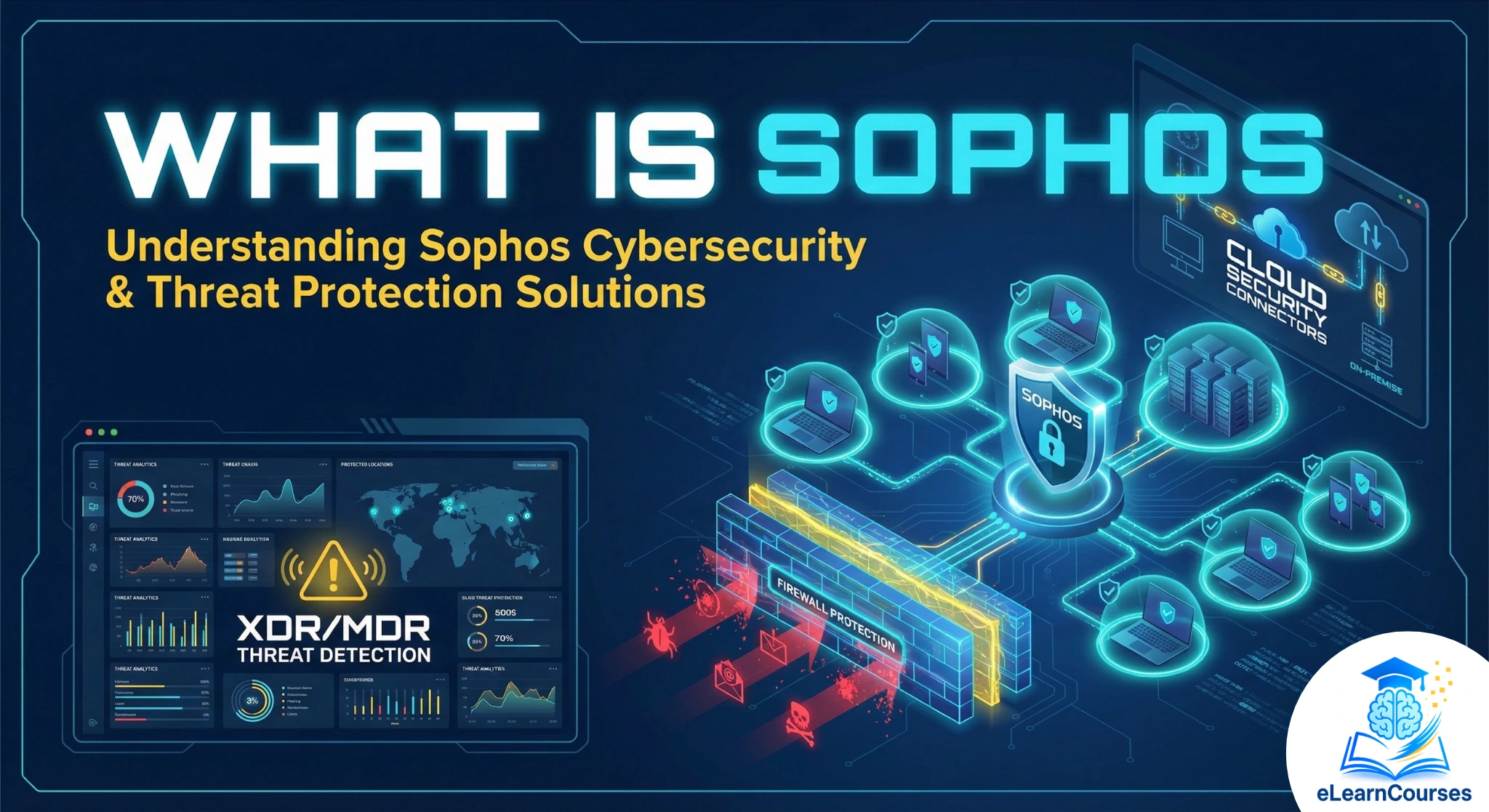
What is Sophos: The Ultimate Guide to Revolutionary Cybersecurity Protection in 2026
In an era where cyber threats evolve at lightning speed and organizations face unprecedented security challenges, understanding what is Sophos has become essential knowledge for businesses, IT professionals, and security-conscious individuals worldwide. Sophos represents far more than just another cybersecurity vendor—it stands as a comprehensive defense ecosystem that has protected millions of users across the globe for nearly four decades.
What is Sophos? At its core, Sophos is a British cybersecurity company that develops and delivers managed security services, advanced cybersecurity software, and sophisticated hardware solutions designed to defeat even the most sophisticated cyberattacks. Founded in 1985, Sophos has evolved from a modest encryption software provider to a global leader defending over 600,000 organizations against ransomware, malware, data breaches, and advanced persistent threats.
This comprehensive guide explores everything you need to know about Sophos—from its origins and product portfolio to its cutting-edge technologies and competitive advantages in the modern cybersecurity landscape.
Understanding What is Sophos: Company Overview and Heritage
The Foundation and Evolution of Sophos
To truly understand what is Sophos, we must examine its remarkable journey through the cybersecurity landscape. Sophos was founded in 1985 by Jan Hruska and Peter Lammer, two visionary entrepreneurs who recognized the emerging need for robust digital security solutions. The company name “Sophos” derives from ancient Greek, meaning “wise” or “learned,” perfectly encapsulating its mission to provide intelligent and effective security solutions.
The early days of Sophos were characterized by humble beginnings—Hruska and Lammer started their work from a semi-detached house in Kidlington, Oxford, developing their first antivirus and encryption products. This grassroots approach laid the foundation for a company culture centered on innovation, adaptability, and customer-focused solutions.
During the late 1980s and throughout the 1990s, Sophos primarily developed and sold security technologies within the United Kingdom, including encryption tools accessible to both private users and businesses. The company launched Sophos Anti-Virus in 1989, marking its entry into comprehensive security solutions that would eventually define its market position.
Strategic Growth and Global Expansion
Understanding what is Sophos requires recognizing its strategic expansion trajectory. In the late 1990s, Sophos concentrated efforts on developing and selling antivirus technology while embarking on an aggressive international expansion program. This global vision transformed Sophos from a regional player into an international cybersecurity powerhouse.
The company’s growth was punctuated by strategic acquisitions that enhanced its capabilities. In 2007, Sophos acquired ENDFORCE, expanding into security policy compliance and network access control. The 2015 merger with Surfright integrated HitmanPro’s behavioral analytics capabilities. In 2017, the acquisition of Invincea brought advanced malware threat detection and prevention technologies into the Sophos portfolio.
Most recently, in October 2024, Sophos announced its intent to acquire SecureWorks for $859 million, demonstrating continued commitment to expanding its managed detection and response capabilities. This acquisition positions Sophos as the leading provider of MDR services globally, defending more than 30,000 organizations.
Ownership Structure and Leadership
The ownership history of Sophos reflects its evolution and market position. In 2010, private equity firm Apax Partners acquired a majority interest in Sophos. The company subsequently went public on the London Stock Exchange, providing additional resources for expansion and innovation.
A pivotal moment occurred in March 2020 when Thoma Bravo, a prominent US-based private equity firm specializing in technology investments, acquired Sophos for approximately $3.9 billion. This acquisition provided Sophos with substantial resources and strategic support to accelerate product development and market expansion.
In May 2024, Joe Levy was appointed as CEO of Sophos, bringing extensive cybersecurity expertise and strategic vision to guide the company through its next phase of growth and innovation.
What is Sophos Central: The Unified Management Platform
Cloud-Native Security Management
A critical component of understanding what is Sophos involves exploring Sophos Central—the cloud-based management platform that serves as the nerve center for all Sophos security solutions. Sophos Central represents a paradigm shift in how organizations manage their cybersecurity infrastructure, eliminating the complexity and fragmentation that plague traditional security implementations.
Sophos Central provides a unified console where administrators can manage endpoint protection, firewalls, email security, mobile devices, servers, and cloud workloads from a single interface. This consolidation dramatically reduces administrative overhead while improving visibility across the entire security estate.
The platform features intuitive dashboards that present critical security information at a glance, including threat alerts, device status, policy compliance, and security posture assessments. Customizable widgets and interactive visualizations enable administrators to focus on the metrics most relevant to their organization’s security objectives.
Synchronized Security Architecture
One of the most powerful aspects of what is Sophos Central is its Security Heartbeat technology—a unique capability that enables different Sophos products to communicate and share threat intelligence in real-time. When a threat is detected on an endpoint, the firewall automatically responds by isolating the affected device, preventing lateral movement across the network.
This synchronized security approach creates a cohesive defense ecosystem where protection, detection, and response capabilities work in concert rather than as isolated silos. The result is faster threat identification, automatic response coordination, and reduced time to containment for security incidents.
Account Health Check and Optimization
Sophos Central includes an Account Health Check feature that continuously monitors security configurations and identifies areas where protection could be enhanced. This proactive approach helps administrators optimize their security posture by identifying misconfigurations, unused licenses, devices requiring updates, and policy settings that deviate from best practices.
With one-click remediation capabilities, administrators can quickly address identified issues, ensuring that security controls remain effective and properly configured as environments evolve.
What is Sophos Intercept X: Next-Generation Endpoint Protection
Revolutionary Deep Learning Technology
To fully comprehend what is Sophos, one must understand Sophos Intercept X—the company’s flagship endpoint protection solution that has consistently earned recognition as an industry leader. Intercept X represents a fundamental departure from traditional signature-based antivirus approaches, leveraging advanced deep learning artificial intelligence to identify both known and unknown malware without relying on signatures.
This deep learning capability enables Intercept X to detect zero-day threats and never-seen-before malware variants that would evade conventional security solutions. The AI models are trained on hundreds of millions of malware samples, enabling them to recognize malicious characteristics and behaviors with exceptional accuracy.
Independent testing organizations consistently validate Intercept X’s effectiveness. The solution has earned AAA ratings from SE Labs for six consecutive reports—a distinction that none of Sophos’ primary competitors has achieved. AV-Test regularly awards Intercept X perfect protection scores, while Gartner Peer Insights reviewers rate it 4.8 out of 5.0 based on real-world customer experiences.
CryptoGuard Anti-Ransomware Technology
Ransomware represents one of the most devastating threats facing organizations today, with attacks becoming increasingly sophisticated and damaging. Understanding what is Sophos Intercept X’s approach to ransomware reveals why it provides unparalleled protection.
CryptoGuard technology monitors file system activity for signs of malicious encryption processes. When ransomware attempts to encrypt files, CryptoGuard instantly detects the activity and shuts down the process before it can spread across the network. Any files that were encrypted are automatically rolled back to their safe state, ensuring business continuity with minimal disruption.
This proactive ransomware protection operates at the kernel level, intercepting encryption attempts regardless of whether the ransomware variant is known or completely novel. The technology protects against both file-based ransomware and master boot record attacks, providing comprehensive coverage against this critical threat vector.
Exploit Prevention and Attack Surface Reduction
Modern cyberattacks frequently leverage exploits—techniques that take advantage of vulnerabilities in legitimate applications to gain unauthorized access or execute malicious code. Intercept X includes sophisticated exploit prevention capabilities that block these attack techniques before they can compromise systems.
The exploit prevention engine monitors application behavior for suspicious activities indicative of exploitation attempts, including buffer overflow attacks, code injection, privilege escalation, and kernel exploits. By blocking the exploitation techniques rather than specific malware samples, Intercept X can stop zero-day attacks that exploit previously unknown vulnerabilities.
Attack surface reduction features further minimize risk by controlling web access, blocking potentially dangerous applications, managing peripheral devices, and preventing unauthorized software execution. These proactive controls reduce the opportunities for attackers to gain initial access to endpoints.
Adaptive Attack Protection
Adaptive Attack Protection (AAP) represents a unique differentiator in understanding what is Sophos Intercept X. This intelligent capability dynamically adjusts security controls based on threat detection, automatically enabling heightened defenses when hands-on-keyboard attacker activity is detected.
When AAP detects signs of active adversarial presence—such as credential theft attempts, lateral movement, or suspicious PowerShell execution—it automatically activates additional protective measures. These include blocking safe mode abuse, preventing programmatic reboots, enhancing credential protection, and restricting network communication to known-good applications.
This adaptive approach ensures that security posture scales appropriately with threat level, providing maximum protection during active attacks while minimizing disruption during normal operations.
What is Sophos MDR: Managed Detection and Response Excellence
24/7 Expert-Led Threat Hunting
Perhaps the most transformative aspect of what is Sophos for many organizations is Sophos Managed Detection and Response (MDR)—a service that extends beyond traditional technology solutions to provide hands-on security expertise. Sophos MDR delivers 24/7 threat monitoring, detection, investigation, and response capabilities powered by a global team of over 500 cybersecurity experts.
This service addresses a critical challenge facing organizations of all sizes: the cybersecurity skills shortage. Most companies lack the resources to staff and maintain a full-scale Security Operations Center (SOC) with round-the-clock coverage. Sophos MDR provides access to elite threat hunters and incident responders without the overhead of building an internal security team.
The MDR team actively hunts for threats within customer environments, identifying subtle indicators of compromise that automated systems might miss. When threats are detected, analysts investigate to understand the full scope and impact, then take targeted actions to neutralize adversaries and prevent damage.
Proactive Threat Intelligence and Investigation
Understanding what is Sophos MDR requires appreciating the depth of threat intelligence that powers the service. The MDR team leverages insights from Sophos X-Ops—a cross-operational task force that includes threat researchers, malware analysts, behavioral scientists, and incident responders.
This collective intelligence enables MDR analysts to recognize attacker techniques, tactics, and procedures (TTPs) based on observations across the entire Sophos customer base. When a novel attack technique is identified in one environment, that knowledge immediately benefits all MDR customers through updated detection logic and hunting strategies.
The MDR service includes correlation analysis that connects seemingly unrelated events to identify complex, multi-stage attacks. Analysts review alerts in the context of broader environmental activity, distinguishing genuine threats from false positives and benign anomalies.
Incident Response and Remediation
When security incidents occur, time is critical. Understanding what is Sophos MDR’s approach to incident response reveals how the service minimizes business impact. Upon detecting confirmed threats, MDR analysts take immediate action to contain attacks, including isolating affected devices, blocking malicious processes, and preventing lateral movement.
The service provides detailed incident reports that explain what happened, how attackers gained access, what systems were affected, and what actions were taken to remediate the threat. These reports include specific recommendations for preventing similar incidents in the future.
For organizations facing active security crises, Sophos offers enhanced Incident Response services with dedicated teams that provide hands-on assistance with forensic investigation, malware analysis, and recovery operations.
Integration Ecosystem
Sophos MDR extends beyond protecting only Sophos products. The service integrates with a comprehensive ecosystem of third-party security tools, including endpoints from other vendors, cloud platforms like AWS and Azure, productivity suites like Microsoft 365 and Google Workspace, and various network security appliances.
This flexibility enables organizations to maximize their existing security investments while gaining MDR coverage across their entire attack surface. The integration approach positions Sophos as a cybersecurity-as-a-service provider rather than simply a technology vendor.
What is Sophos Firewall: Network Security Excellence
Next-Generation Firewall Capabilities
Examining what is Sophos Firewall reveals another cornerstone of the company’s comprehensive security portfolio. Sophos Firewall provides network-level protection that complements endpoint security, creating defense in depth across the entire infrastructure.
The firewall platform delivers traditional network security functions including stateful packet inspection, VPN capabilities, and network segmentation, enhanced with next-generation features like application control, intrusion prevention, web filtering, and SSL/TLS inspection.
Sophos Firewall integrates with Sophos Central, enabling unified management alongside endpoint, email, and mobile security solutions. The synchronized security architecture allows the firewall to automatically respond to threats detected on endpoints, creating coordinated defense that exceeds what isolated security tools can achieve.
Xstream Architecture and Performance
Sophos Firewall leverages the Xstream architecture—a purpose-built system that delivers industry-leading throughput and low latency. This architecture accelerates security processing through dedicated processors for specific security functions, enabling comprehensive inspection without compromising network performance.
The latest XGS Series hardware appliances deliver exceptional value in terms of performance per dollar, making enterprise-grade security accessible to organizations of all sizes. These appliances support features like SD-WAN, zero trust network access, and advanced threat protection while maintaining wire-speed performance.
Integrated ZTNA and Secure Access
Modern workforces are distributed and mobile, accessing corporate resources from diverse locations and devices. Understanding what is Sophos Firewall’s approach to secure access reveals how the platform adapts to contemporary connectivity requirements.
Sophos Firewall integrates Zero Trust Network Access (ZTNA) capabilities directly into the firewall, eliminating the need for separate ZTNA appliances or services. This integration simplifies deployment while providing granular application-level access control based on user identity, device posture, and contextual factors.
ZTNA replaces traditional VPN access with application-specific connections that limit user access to only the resources they’re authorized to use. This microsegmentation approach dramatically reduces the attack surface and limits the potential for lateral movement if credentials are compromised.
Threat Intelligence and Protection
Sophos Firewall benefits from real-time threat intelligence provided by Sophos X-Ops. The platform automatically updates with the latest indicators of compromise, malicious domains, botnet command-and-control servers, and attack signatures.
Intrusion prevention system (IPS) capabilities detect and block network-based attacks, including vulnerability exploits, port scans, and suspicious traffic patterns. Advanced threat protection analyzes file downloads and email attachments in a cloud-based sandbox environment, detonating suspicious files in isolation to identify previously unknown malware.
What is Sophos XDR: Extended Detection and Response
Cross-Product Threat Correlation
Extended Detection and Response (XDR) represents the evolution of security operations, and understanding what is Sophos XDR reveals how the company leads this transformation. While traditional EDR focuses solely on endpoints, XDR extends visibility and correlation across the entire attack surface—endpoints, servers, firewalls, email, cloud workloads, and mobile devices.
Sophos XDR ingests security telemetry from all these sources into a centralized data lake where advanced analytics and machine learning identify threats that would be invisible when examining individual data sources in isolation. This holistic approach enables detection of complex, multi-stage attacks that span multiple systems and security layers.
The platform provides both native XDR capabilities for Sophos products and turnkey integrations with third-party security solutions. Organizations can connect existing security investments—including endpoint protection from CrowdStrike or Microsoft, network equipment from Cisco, and cloud platforms from AWS or Azure—into the Sophos XDR platform.
Threat Hunting and Investigation Tools
Sophos XDR provides security analysts and IT administrators with powerful tools for proactive threat hunting and incident investigation. Live Discover enables querying across all managed devices using natural language or SQL-like syntax, making it easy to search for indicators of compromise or suspicious activities.
Live Response provides a secure terminal connection to individual devices, enabling analysts to collect forensic evidence, analyze running processes, review file systems, and take remediation actions—all without physical access to the machine.
The platform includes pre-built detection queries developed by Sophos threat researchers, enabling even small security teams to leverage sophisticated hunting techniques. These queries continuously search for indicators of advanced threats including fileless malware, living-off-the-land techniques, credential theft, and lateral movement.
Automated Response and Playbooks
Time is critical when responding to security incidents, and understanding what is Sophos XDR’s automation capabilities reveals how the platform accelerates response. Automated response actions can be triggered based on specific detections, immediately containing threats before analysts even review alerts.
These automated responses include isolating compromised devices, blocking malicious processes, quarantining suspicious files, disabling user accounts, and updating firewall rules. Response playbooks enable security teams to codify their incident response procedures, ensuring consistent and rapid execution.
For organizations using Sophos MDR, the XDR platform serves as the investigation and response interface for the MDR team, enabling analysts to quickly understand threat scope and take precise remediation actions on behalf of customers.
What is Sophos Email Security: Message Protection
Advanced Threat Detection for Email
Email remains the primary vector for cyberattacks, making email security essential to comprehensive defense. Understanding what is Sophos Email reveals how the company addresses this critical attack surface.
Sophos Email provides protection against phishing, business email compromise, malware delivery, and spam. The solution analyzes message content, sender reputation, attachment characteristics, and link destinations to identify malicious messages before they reach user inboxes.
Time-of-Click URL protection ensures that malicious links are blocked even if they’re weaponized after message delivery—a common attacker tactic for evading initial security scans. Attachment sandboxing detonates suspicious files in isolated environments to identify previously unknown malware.
AI-Powered Phishing Detection
Phishing attacks have become increasingly sophisticated, with attackers leveraging social engineering and impersonation techniques that can fool even security-aware users. Sophos Email employs artificial intelligence and natural language processing to detect subtle signs of phishing attempts.
The system analyzes message characteristics including sender patterns, linguistic cues, urgency indicators, and requests for sensitive information. Machine learning models trained on millions of phishing examples recognize the tactics attackers use to manipulate recipients.
Business email compromise protection specifically defends against impersonation attacks where attackers pose as executives or business partners to trick recipients into transferring funds or disclosing confidential information.
Simplified Administration and Policy Management
Sophos Email integrates with Sophos Central, enabling unified management alongside other security solutions. Administrators can define policies based on organizational requirements, configure filtering rules, manage allow/block lists, and review quarantined messages from the centralized console.
The solution supports both gateway and API-based deployment models, providing flexibility for organizations using Microsoft 365 or Google Workspace. API integration enables inspection of internal email and protection against compromised account attacks that bypass traditional perimeter defenses.
What is Sophos X-Ops: Threat Intelligence Powerhouse
Unified Threat Research and Analysis
At the heart of understanding what is Sophos lies Sophos X-Ops—the threat intelligence and research organization that powers all Sophos security solutions. X-Ops represents a cross-functional task force of over 500 security experts spanning multiple specialized teams.
SophosLabs conducts malware analysis, develops detection signatures, and researches emerging threat techniques. Sophos SecOps manages the Security Operations Center that delivers MDR services while gathering intelligence from real-world incidents. SophosAI develops machine learning models and artificial intelligence capabilities that enhance automated detection.
This collaborative structure ensures that insights gained in one area immediately benefit the entire Sophos ecosystem. Novel malware discovered by Labs researchers becomes detection logic in security products. Attack techniques observed by SecOps analysts inform product development priorities. AI innovations developed by research teams enhance protection across all solutions.
Groundbreaking Threat Research
Sophos X-Ops has published groundbreaking research that has shaped global understanding of advanced threats. Recent notable investigations include:
Operation Crimson Palace: A deep-dive investigation into sophisticated Chinese state-sponsored attacks targeting high-profile government organizations in Southeast Asia. The research revealed novel malware families and attack techniques that informed defensive strategies worldwide.
Pacific Rim Counter-Offensive: A five-year investigation tracking China-based threat groups targeting critical infrastructure. This unprecedented research documented targeted attacks against Sophos Firewall devices and the defensive operations undertaken to neutralize these threats.
Active Adversary Reports: Regular publications analyzing real-world incident response cases, providing insights into attacker behaviors, dwell times, common vulnerabilities, and effective defensive strategies based on hundreds of investigated security breaches.
These research efforts not only protect Sophos customers but contribute to broader cybersecurity community knowledge, helping organizations worldwide understand and defend against sophisticated threats.
Real-Time Intelligence Sharing
The intelligence generated by Sophos X-Ops flows directly into security products through automated updates. When new malware families are identified, detection signatures are pushed to all protected endpoints within hours. When novel attack techniques are observed, protective rules are updated across firewalls and MDR hunting queries.
This real-time intelligence sharing ensures that customers benefit from collective defense—threats targeting any Sophos-protected organization contribute to enhanced protection for all customers. The scale of the Sophos customer base (over 600,000 organizations) provides unmatched visibility into the global threat landscape.
What is Sophos Mobile: Securing Mobile Devices
Comprehensive Mobile Protection
The proliferation of smartphones and tablets in business environments creates new security challenges. Understanding what is Sophos Mobile reveals how the company extends protection to iOS and Android devices.
Sophos Mobile provides unified endpoint management (UEM) and mobile threat defense (MTD) capabilities in a single solution. Organizations can manage device configurations, deploy applications, enforce security policies, and protect against mobile-specific threats from the Sophos Central console.
The solution protects against malicious applications, network-based threats, device exploitation, phishing attacks delivered through SMS or messaging apps, and man-in-the-middle attacks on public Wi-Fi networks.
Also Read: What is Cyber Security and its importance
Mobile Threat Defense
Sophos Mobile includes deep learning-powered malware detection specifically tuned for mobile threats. The solution identifies malicious applications that may have bypassed app store security reviews, protecting users from functionality abuse, data exfiltration, and financial fraud.
Network protection features warn users about connections to malicious or suspicious networks, preventing attacks that attempt to intercept communications or redirect traffic through attacker-controlled infrastructure.
Device compliance checks ensure that managed devices meet security requirements, including screen lock configuration, encryption status, operating system updates, and jailbreak/root detection. Non-compliant devices can be automatically restricted from accessing corporate resources.
Application and Content Management
Sophos Mobile enables secure distribution of corporate applications and documents through containerization technologies. Business applications and data are isolated from personal apps, enabling bring-your-own-device (BYOD) programs while protecting corporate information.
Administrators can define policies that restrict data sharing between corporate and personal applications, prevent copying sensitive information to unsecured locations, and enable remote wipe of corporate data without affecting personal content.
Integration with Sophos Intercept X for Mobile provides additional security features including secure browsing, password management, multi-factor authentication, and QR code scanning with malicious content detection.
What is Sophos for Different Organization Sizes
Small Business Security Solutions
Understanding what is Sophos for small businesses reveals solutions specifically designed for organizations with limited IT resources and budgets. Sophos recognizes that small businesses face the same sophisticated threats as large enterprises but lack dedicated security staff and extensive budgets.
Sophos offers simplified deployment options, pre-configured security policies that follow industry best practices, and intuitive management interfaces that don’t require extensive cybersecurity expertise. The Sophos MDR service is particularly valuable for small businesses, providing enterprise-grade security operations without the need to hire specialized personnel.
Flexible licensing models and competitive pricing make comprehensive security accessible to organizations of all sizes. Educational institutions and government agencies receive special pricing to support their unique budget constraints.
Midsize Business Protection
For midsize organizations with 100-2,500 employees, understanding what is Sophos reveals scalable solutions that grow with business needs. These organizations typically have small IT teams responsible for increasingly complex infrastructure, including cloud services, remote workers, and multiple locations.
Sophos provides the breadth of security capabilities needed to protect diverse environments while maintaining centralized visibility and control. The platform scales efficiently as organizations add users, devices, and locations without requiring architectural redesign.
Integration with productivity platforms like Microsoft 365 and Google Workspace, as well as business applications like CRM and ERP systems, ensures that security doesn’t impede business operations. API-based integrations enable automation of security operations within existing workflows.
Enterprise Security Architecture
Large enterprises with thousands of employees and complex global infrastructure require security solutions that operate at scale while supporting sophisticated requirements. Understanding what is Sophos for enterprises reveals capabilities including multi-tenancy for managing separate business units, role-based access controls with granular permissions, and advanced reporting for compliance and risk management.
Sophos supports hybrid and multi-cloud environments, protecting workloads across on-premises data centers, AWS, Azure, Google Cloud, and other platforms. The architecture accommodates complex network topologies including SD-WAN, MPLS, and multi-site deployments.
Enterprise organizations benefit from white-glove implementation services, dedicated technical account management, and customized threat intelligence briefings. Sophos partners with leading systems integrators and managed service providers to deliver enterprise-scale deployments.
What is Sophos Competitive Positioning
Advantages Over Traditional Antivirus Vendors
Understanding what is Sophos compared to traditional antivirus vendors reveals fundamental differences in approach and capabilities. Legacy antivirus companies primarily focus on malware detection using signature-based methods that struggle against modern threats.
Sophos employs multiple detection techniques including deep learning AI, behavioral analysis, exploit prevention, and threat intelligence—creating layered defense that doesn’t rely solely on identifying known malware. This multi-faceted approach provides superior protection against zero-day attacks and advanced persistent threats.
Additionally, traditional antivirus solutions are standalone products requiring separate purchases for firewall, email security, and mobile protection. Sophos provides a comprehensive ecosystem where all security components integrate through Sophos Central, sharing threat intelligence and coordinating responses.
Differentiation from EDR-Focused Competitors
Some cybersecurity vendors focus heavily on endpoint detection and response capabilities, emphasizing visibility and investigation tools. While these capabilities are important, understanding what is Sophos reveals a different philosophy: prevention-first security.
Sophos Intercept X stops the vast majority of threats at the endpoint through superior protection capabilities, reducing the number of incidents that require investigation and response. This approach minimizes the burden on security teams and reduces risk by preventing compromise rather than detecting and responding after systems are already affected.
When threats do evade initial protections, Sophos XDR provides comprehensive detection and response capabilities extending beyond endpoints to firewalls, email, cloud, and mobile—offering broader visibility than EDR-only solutions.
Advantages Over Platform Vendors
Large technology platforms like Microsoft offer security features integrated with their productivity and infrastructure products. While convenient, understanding what is Sophos compared to these platform solutions reveals important differences.
Platform vendors face inherent conflicts of interest—their security solutions must work seamlessly with their other products but may not provide optimal protection against attacks targeting those same platforms. Sophos, as an independent security specialist, focuses exclusively on cybersecurity without the constraints of maintaining compatibility with other business priorities.
Sophos solutions integrate with Microsoft, Google, AWS, and other platforms while providing depth of security capabilities that platform vendors don’t match. Independent testing consistently shows Sophos outperforming platform security solutions in detection rates and threat prevention.
Value Proposition vs. Managed Service Providers
Some organizations engage managed security service providers (MSSPs) to handle their cybersecurity operations. Understanding what is Sophos MDR compared to traditional MSSP relationships reveals distinct advantages.
Traditional MSSPs typically charge based on the number of devices or data volume processed, with costs escalating as organizations grow. Sophos MDR offers simple, predictable per-user pricing that includes unlimited incident response—providing budget certainty and eliminating concerns about cost overruns during security incidents.
Sophos MDR analysts have deep expertise in Sophos technologies and access to comprehensive telemetry from Sophos products, enabling faster and more accurate threat detection than MSSPs working with unfamiliar technologies. The integration of MDR with Sophos security products creates efficiencies that generic MSSPs cannot match.
What is Sophos Industry Recognition and Validation
Analyst Firm Leadership Positions
Understanding what is Sophos’s market position requires examining independent validation from industry analysts. Sophos has been recognized as a Leader in Gartner’s Magic Quadrant for Endpoint Protection Platforms for 16 consecutive years—longer than any other vendor. This sustained leadership demonstrates consistent excellence and innovation over nearly two decades.
IDC MarketScape has named Sophos a Leader in multiple categories including Worldwide Managed Detection and Response (2024), Worldwide Modern Endpoint Security for Small Businesses (2024), Worldwide Modern Endpoint Security for Midsize Businesses (2024), and European Managed Detection and Response Services (2024).
These analyst recognitions validate that Sophos delivers comprehensive capabilities, strong business strategies, and excellent customer outcomes compared to competing vendors. The breadth of leadership positions—spanning endpoint, MDR, and multiple market segments—demonstrates versatility and depth.
Customer Satisfaction and Peer Reviews
Independent customer reviews provide unfiltered insights into real-world experiences. Understanding what is Sophos according to actual users reveals consistently high satisfaction ratings across multiple platforms.
Gartner Peer Insights customers have awarded Sophos a 4.8 out of 5.0 rating based on hundreds of reviews, making Sophos one of the highest-rated cybersecurity vendors. Customers specifically praise ease of deployment, management simplicity, detection effectiveness, and excellent technical support.
G2 Grid Reports consistently rank Sophos as a Leader across multiple categories including Endpoint Protection, EDR, XDR, Firewall, and MDR. Notably, Sophos has earned the #1 overall position in Firewall solutions for six consecutive G2 seasonal reports, reflecting exceptional user satisfaction.
These peer reviews carry particular weight because they represent experiences of actual customers rather than vendor marketing claims or paid endorsements.
Independent Testing Excellence
Third-party testing organizations provide objective validation of security effectiveness. Understanding what is Sophos’s testing performance reveals industry-leading results across multiple evaluation frameworks.
SE Labs has awarded Sophos Endpoint AAA ratings—the highest possible—in six consecutive reports, with 100% protection scores. None of Sophos’s primary competitors has achieved this level of sustained excellence in SE Labs testing.
AV-Test regularly awards Sophos perfect scores in protection testing, recognizing both malware detection capabilities and low false positive rates. MITRE ATT&CK Evaluations have validated Sophos’s detection and response capabilities, with the company receiving the highest possible ratings for 100% of sub-steps in Windows and Linux ransomware attack scenarios.
These testing results demonstrate that Sophos solutions deliver on their protection promises in rigorous, real-world attack simulations.
What is Sophos Future Direction and Innovation
Artificial Intelligence and Machine Learning Advancement
The future of cybersecurity relies heavily on artificial intelligence, and understanding what is Sophos’s AI strategy reveals ongoing innovation. Sophos continues investing heavily in both deep learning models for threat detection and generative AI capabilities for security operations enhancement.
Recent initiatives include AI-powered threat hunting assistance that helps analysts formulate effective queries and interpret results. Natural language interfaces enable security teams to ask questions about their environment in plain English, with the system automatically translating queries into complex data lake searches.
Generative AI capabilities assist with alert triage, automatically summarizing incidents and recommending response actions based on similar historical events. These innovations amplify human analyst capabilities rather than attempting to replace human expertise.
Cloud-Native Architecture Evolution
As organizations accelerate cloud adoption, understanding what is Sophos’s cloud strategy becomes increasingly important. Sophos continues evolving toward cloud-native architecture that maximizes scalability, resilience, and global availability.
The Sophos Data Lake—the centralized repository for security telemetry—leverages cloud infrastructure to provide massive scale and rapid query performance across petabytes of data. Regional data center expansion ensures that customers can store security data within their preferred geographic regions for compliance and performance optimization.
Serverless computing capabilities enable automatic scaling during security incidents, ensuring that investigation and response capabilities remain performant even during major attacks affecting thousands of devices simultaneously.
Adaptive Cybersecurity Ecosystem
The future vision of what is Sophos centers on the Adaptive Cybersecurity Ecosystem—a framework where security solutions continuously adapt to changing threat landscapes and business requirements. This ecosystem emphasizes:
Continuous Learning: Security systems that learn from every attack attempt, automatically improving detection and response capabilities based on observed attacker behaviors.
Contextual Responses: Security controls that adapt based on user context, device posture, location, and risk factors—enabling frictionless experiences for trusted activities while imposing additional scrutiny on potentially risky scenarios.
Open Integration: Rather than requiring customers to replace all existing security tools, the adaptive ecosystem embraces integration with third-party solutions, maximizing existing investments while enhancing overall effectiveness.
Outcome-Focused Metrics: Moving beyond traditional security metrics like detection rates toward business-relevant outcomes including prevented breaches, reduced dwell time, and business impact minimization.
Expanded Service Offerings
Understanding what is Sophos’s service roadmap reveals continued expansion beyond traditional technology products. The company recognizes that organizations need both technology and expertise to achieve superior cybersecurity outcomes.
Sophos Managed Risk service, launched in 2024, combines vulnerability management technology from Tenable with Sophos threat expertise to identify and prioritize external attack surface exposures. This proactive approach helps organizations fix vulnerabilities before attackers can exploit them.
Additional service expansions may include security awareness training integration, compliance and governance consulting, cyber insurance optimization guidance, and incident readiness assessments—transforming Sophos from a technology provider into a comprehensive cybersecurity partner.
What is Sophos Implementation and Best Practices
Deployment Planning and Architecture
Successful implementation begins with understanding what is Sophos’s deployment best practices. Organizations should start by documenting their current security architecture, identifying gaps, and defining desired outcomes from Sophos solutions.
Cloud-based deployment through Sophos Central offers the fastest implementation path, requiring no on-premises infrastructure. Endpoint agents can be deployed through existing software distribution tools like SCCM or Intune, through Active Directory Group Policy, or via manual installation on individual devices.
For firewall deployments, organizations should plan network architecture considering throughput requirements, VPN user counts, and feature enablement. Sophos provides sizing tools and reference architectures to guide appropriate hardware selection.
Migration from Existing Security Solutions
Organizations transitioning from other security vendors should understand what is Sophos’s migration approach. The platform supports coexistence with existing security solutions during transition periods, enabling phased migration that minimizes risk.
Pilot groups allow validation of protection effectiveness and compatibility before full deployment. Starting with non-critical systems or specific departments enables teams to gain familiarity with Sophos management interfaces and policies before enterprise-wide rollout.
Policy translation services help convert existing security configurations into equivalent Sophos policies, maintaining security posture while transitioning platforms. Sophos Professional Services and partner organizations provide migration assistance for complex environments.
Optimization and Tuning
Initial deployment represents just the beginning of understanding what is Sophos’s full potential. Organizations should continuously optimize configurations based on their unique environments and threat landscapes.
Regular policy reviews ensure security controls align with current business requirements and risk tolerance. As organizations adopt new applications or infrastructure, security policies should evolve accordingly.
False positive tuning maintains user productivity while maximizing detection coverage. Sophos provides mechanisms for excluding trusted applications, whitelisting legitimate network traffic, and adjusting sensitivity levels without compromising protection.
Performance monitoring identifies opportunities for optimization, such as excluding file servers from certain scan operations or adjusting scheduled scan timing to minimize impact on business operations.
Integration with SIEM and Workflow Tools
Enterprise security operations benefit from understanding what is Sophos’s integration ecosystem. The platform provides APIs and pre-built connectors for popular SIEM platforms including Splunk, QRadar, ArcSight, and Azure Sentinel.
These integrations enable security operations centers to incorporate Sophos telemetry into unified security dashboards and correlation workflows. Alert forwarding capabilities ensure that critical Sophos detections trigger appropriate incident response processes.
Ticketing system integrations with ServiceNow, Jira, and similar platforms enable automatic ticket creation for security incidents, streamlining workflow and ensuring proper documentation and tracking.
What is Sophos Licensing and Pricing Models
Flexible Subscription Options
Understanding what is Sophos’s licensing approach reveals flexible models designed to accommodate different organizational preferences and budgetary cycles. All Sophos products are available through subscription licensing, ensuring continuous access to updates, threat intelligence, and support.
Subscriptions typically range from one to three-year terms, with multi-year commitments offering cost savings. Organizations can adjust license counts at renewal to accommodate growth or contraction, providing scalability aligned with business changes.
Bundle packages combine multiple Sophos products at discounted rates compared to purchasing each component individually. Common bundles include endpoint protection plus MDR, complete network security including firewall and access points, or comprehensive platform bundles covering endpoint, firewall, email, and cloud protection.
Sophos MDR Service Tiers
MDR services are available in multiple tiers reflecting different service levels. Understanding what is Sophos MDR Complete reveals the entry-level service providing 24/7 threat detection, investigation, and response for both Sophos and integrated third-party security tools.
Sophos MDR Advanced adds proactive threat hunting, where analysts actively search for threats based on latest intelligence and observed adversary tactics. This tier includes deeper investigation and more comprehensive response actions.
Custom MDR engagements provide dedicated analysts, customized detection logic, integrated tabletop exercises, and executive threat briefings. Large enterprises and organizations in high-risk sectors benefit from these tailored service levels.
Managed Service Provider Programs
Channel partners and managed service providers represent important distribution channels for understanding what is Sophos in the SMB market. Sophos Partner Programs provide tools, resources, and incentives for MSPs to deliver Sophos solutions to their customers.
The Sophos MSP Connect program includes centralized multi-tenant management, flexible billing integration, technical enablement resources, and dedicated partner support. This program enables MSPs to efficiently deliver security services to dozens or hundreds of customers from unified platforms.
MSPs can white-label Sophos services, presenting security capabilities under their own brand while leveraging Sophos technology and threat intelligence. This arrangement allows service providers to differentiate their offerings while relying on proven security platforms.
What is Sophos Customer Success and Support
Technical Support Services
Understanding what is Sophos’s support model reveals comprehensive assistance options. All subscription licenses include access to Sophos Support, providing technical assistance via phone, email, and web portal.
Support engineers help with troubleshooting, configuration guidance, policy optimization, and incident investigation. The global support organization operates follow-the-sun coverage, ensuring assistance availability regardless of customer time zone.
Sophos Community forums provide peer-to-peer knowledge sharing where administrators can ask questions, share configurations, and learn from collective community experience. Product documentation, knowledge base articles, and video tutorials provide self-service resources.
Professional Services and Training
Organizations seeking implementation assistance can engage Sophos Professional Services for deployment planning, migration execution, architecture design, and optimization consulting. These services accelerate time-to-value and ensure best-practice implementations.
Training programs educate administrators on Sophos technologies through instructor-led courses, online learning modules, and certification programs. The Sophos Certified Architect and Sophos Certified Engineer credentials validate expertise and demonstrate professional competency.
Partner organizations also provide implementation, migration, and managed service offerings built on Sophos platforms, extending the ecosystem of assistance available to customers.
Customer Success Programs
Enterprise customers benefit from Customer Success Managers who provide proactive guidance, quarterly business reviews, product roadmap insights, and escalation assistance. These relationships ensure customers maximize value from Sophos investments.
User group meetings, both regional and online, facilitate knowledge sharing among customers, product demonstrations, and direct feedback to Sophos product teams. These forums strengthen community connections and inform product development priorities.
What is Sophos: Addressing Common Questions
How Does Sophos Protect Against Ransomware?
Understanding what is Sophos’s ransomware protection reveals multiple defensive layers. Deep learning AI prevents ransomware execution by identifying malicious characteristics before files run. CryptoGuard technology monitors for encryption behaviors and immediately stops ransomware processes while automatically rolling back encrypted files.
Exploit prevention blocks the vulnerability exploitation techniques that ransomware often uses for initial system compromise. Tamper protection prevents ransomware from disabling security software. For organizations with Sophos MDR, analysts actively hunt for ransomware indicators and respond immediately when detected.
What Makes Sophos Different from Free Antivirus?
Free antivirus products provide basic malware detection using signature-based methods with limited protection against advanced threats. Understanding what is Sophos compared to free solutions reveals comprehensive security spanning endpoint protection, network security, email protection, and 24/7 expert monitoring through MDR services.
Sophos employs multiple detection technologies including AI, behavioral analysis, and exploit prevention rather than relying solely on signatures. The platform provides centralized management, detailed reporting, policy enforcement, and technical support—capabilities absent from consumer-grade free solutions.
Can Sophos Protect Remote and Hybrid Workers?
Modern workforce distributions make understanding what is Sophos’s approach to remote work essential. Sophos solutions protect endpoints regardless of location—whether on corporate networks, home networks, or public Wi-Fi. The cloud-based Sophos Central management ensures administrators can monitor and manage remote devices as easily as on-premises systems.
Zero Trust Network Access integrated into Sophos Firewall provides secure application access without traditional VPN limitations. Sophos Mobile protects smartphones and tablets that remote workers use to access corporate resources. MDR services monitor all protected devices continuously regardless of their physical location.
How Quickly Can Sophos Be Deployed?
Deployment timelines depend on environment size and complexity. Small businesses can deploy Sophos Intercept X to 50-100 endpoints within days. Mid-size organizations typically complete full deployment within 2-4 weeks including pilot testing and phased rollout.
Enterprise deployments may span several months to ensure proper integration with existing systems, policy customization, and comprehensive training. However, immediate protection begins as soon as endpoints install agents—full feature optimization can occur progressively.
Sophos MDR services can be activated within days of endpoint deployment, immediately providing 24/7 monitoring and response capabilities even for newly protected environments.
Conclusion: Understanding What is Sophos for Your Organization
Throughout this comprehensive exploration of what is Sophos, we’ve examined how this revolutionary cybersecurity leader protects over 600,000 organizations worldwide through innovative technology, expert services, and comprehensive security platforms. From its humble origins in 1985 to its current position as a global leader in endpoint protection, managed detection and response, and network security, Sophos has consistently demonstrated commitment to customer protection and technological innovation.
Understanding what is Sophos reveals more than just another security vendor—it represents a fundamental shift toward integrated, intelligent, and expert-supported cybersecurity. The Sophos ecosystem combines deep learning artificial intelligence, synchronized security architecture, comprehensive threat intelligence, and 24/7 expert monitoring to deliver superior outcomes compared to traditional security approaches.
For small businesses lacking dedicated security staff, Sophos provides enterprise-grade protection through intuitive management and MDR services that deliver expertise without the overhead. Mid-size organizations benefit from scalable solutions that grow alongside business requirements without architectural limitations. Enterprises leverage comprehensive capabilities spanning on-premises, cloud, and hybrid environments with the flexibility to integrate existing security investments.
The consistent recognition from industry analysts, independent testers, and most importantly, actual customers validates that Sophos delivers on its protection promises. With AAA ratings from SE Labs, Leader positions in Gartner Magic Quadrants, and 4.8 out of 5.0 customer ratings, the evidence overwhelmingly demonstrates Sophos excellence.
As cyber threats continue evolving in sophistication and impact, understanding what is Sophos becomes essential knowledge for anyone responsible for organizational security. Whether you’re evaluating security solutions for the first time, considering migration from existing platforms, or seeking to enhance current protections, Sophos deserves serious consideration.
The future of cybersecurity belongs to platforms that combine prevention-first technology, comprehensive visibility, expert human intelligence, and adaptive capabilities. Sophos exemplifies this future, continuously innovating while maintaining unwavering focus on customer protection. By understanding what is Sophos and how its solutions address modern security challenges, organizations can make informed decisions that strengthen their security posture and protect their most valuable assets against today’s threats and tomorrow’s unknowns.